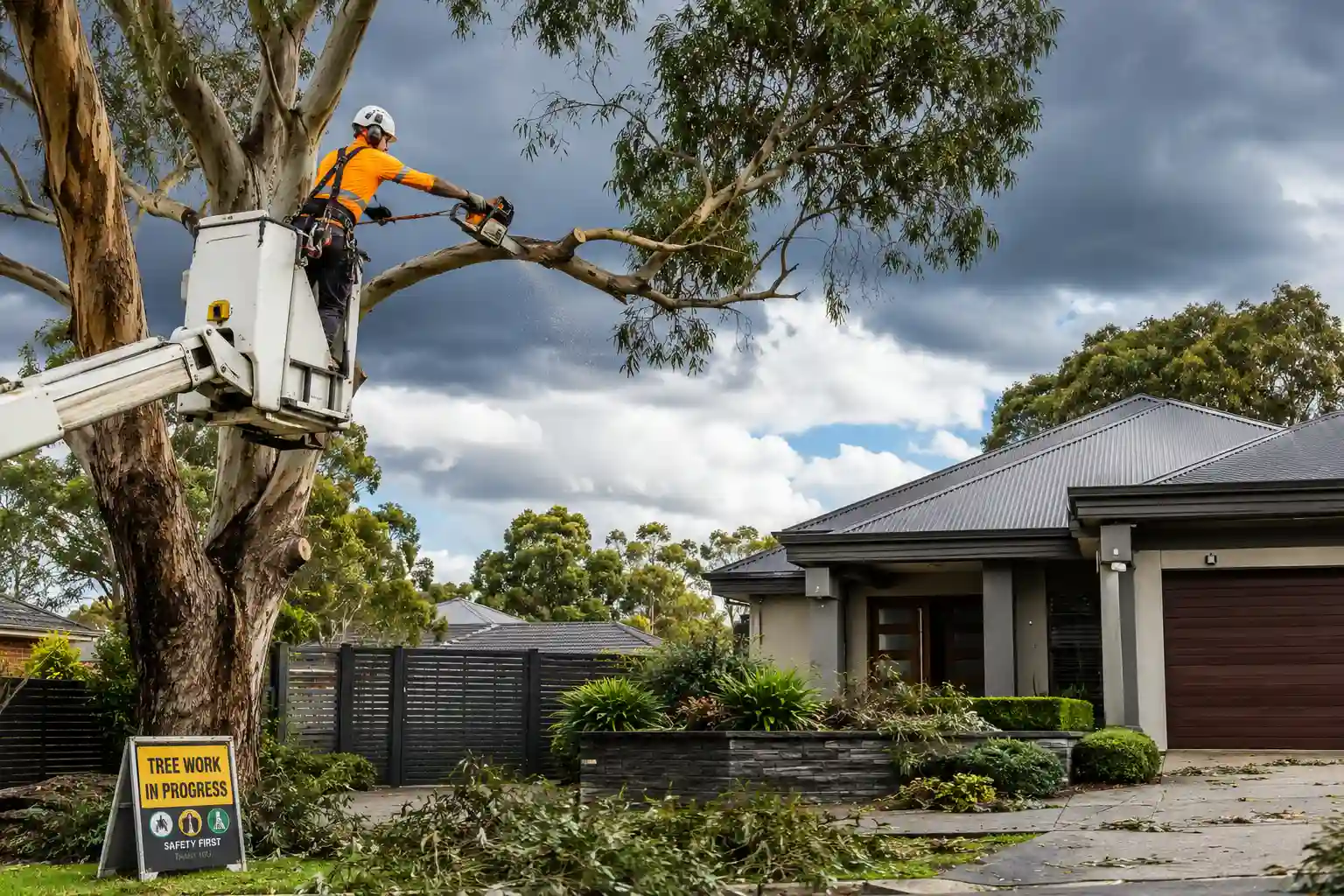
You can prepare my trees for a storm by arranging regular inspections, removing hazardous branches, maintaining healthy growth and checking for signs of weakness before severe weather arrives. Proper tree care helps reduce the chance of falling limbs and property damage.
Australian homes often have trees close to roofs, fences, driveways and outdoor living areas. During storms, strong winds and heavy rain can place extra pressure on branches, trunks and root systems, especially when trees already have damage or poor structure.
Why Preparing Trees Before Storms Matters
Storm damage often happens because existing tree problems become worse under extreme weather conditions. A tree with weak branches, decay or poor balance may struggle to handle strong winds.
Preparing your trees before a storm gives you the opportunity to identify potential risks early. Regular maintenance can help improve tree structure and reduce hazards around your property.
Tree preparation is not about removing every tree that could be affected by weather. Healthy trees can often withstand storms when they are properly maintained and growing in suitable conditions.
How Do I Prepare My Trees for a Storm?
To prepare my trees for a storm, start by checking their condition and arranging professional maintenance where needed. A proactive approach can help identify issues before they become emergencies.
Important steps include:
- Inspect trees for dead, broken or weak branches
- Remove hazardous limbs through correct pruning
- Check for signs of trunk damage or decay
- Monitor trees that are leaning or unstable
- Keep the area around tree bases clear
- Avoid damaging roots through unnecessary digging or construction
A professional tree assessment can identify risks that may not be obvious from ground level.
Check for Dead and Weak Branches
Dead branches are one of the most common causes of storm-related tree damage. These branches can become heavier when wet and may break during strong winds.
Look for branches that:
- Have no leaves or signs of growth
- Appear cracked or damaged
- Hang lower than usual
- Rub against other branches
- Sit above areas where people gather
Removing hazardous branches before storms can improve safety while allowing the tree to maintain healthy growth.
Incorrect pruning can create new problems, so larger branches should be managed by trained professionals using suitable equipment and techniques.
Inspect Tree Health and Structure
A healthy-looking tree may still have hidden problems. Internal decay, root damage and structural weaknesses can affect how a tree responds during severe weather.
Signs that may require attention include:
- Cracks in the trunk
- Fungal growth near the base
- Cavities or hollow sections
- Soil movement around roots
- Sudden changes in growth patterns
Tree species, age and growing conditions all influence storm resistance. An arborist can assess these factors and recommend suitable maintenance.
Maintain Trees Away From Property Structures
Trees provide many benefits, but their location matters when preparing for storms. Branches growing close to buildings or infrastructure can create higher risks during extreme weather.
Pay particular attention to trees near:
- Homes and garages
- Powerlines
- Driveways
- Fences
- Outdoor entertaining areas
Keeping appropriate clearance through professional pruning can help reduce the chance of branches impacting important areas.
The Role of Tree Pruning Before Storm Season
Although trees naturally adapt to weather conditions, poorly maintained growth can increase stress during storms. Correct pruning helps improve branch structure and remove unnecessary weight.
Professional pruning focuses on maintaining the tree’s health rather than removing excessive growth. Over-pruning can weaken trees and affect their ability to recover.
ALL HILLS DISTRICT TREE SERVICES PTY. LTD provides tree pruning and tree care solutions to help Australian property owners manage potential storm risks.
What to Do After a Storm Damages Your Trees
After a storm, avoid approaching damaged trees until you have checked the area is safe. Broken branches can remain under tension and fall unexpectedly.
After severe weather:
- Check for fallen or hanging branches from a safe distance.
- Look for changes in the tree’s position or stability.
- Keep children and pets away from damaged areas.
- Avoid attempting large branch removal yourself.
- Arrange professional assessment if damage is present.
Storm-damaged trees may require pruning, support or removal depending on their condition.
Common Mistakes When Preparing Trees for Storms
One mistake homeowners make is ignoring small warning signs. A minor crack or dead branch can become a larger problem during strong winds.
Another mistake is performing major tree work without the right knowledge or equipment. Tree pruning near structures or large branches requires careful planning and safety procedures.
Regular inspections provide a better opportunity to address concerns before storms create urgent situations.
Australian Tree Care and Safety Considerations
Australian tree work should follow recognised arboricultural practices and workplace safety requirements. Professional tree specialists use appropriate equipment and methods when working with hazardous trees.
Some local councils also have regulations regarding protected trees and removal requirements. Checking local rules before carrying out major tree work helps ensure compliance.
When to Call a Professional
If you are unsure how to prepare my trees for a storm, professional advice can help identify risks and suitable solutions. A qualified tree specialist can inspect your trees, recommend maintenance and help reduce potential storm hazards.
ALL HILLS DISTRICT TREE SERVICES PTY. LTD provides tree pruning, tree assessments and removal services to assist property owners across Australia. Contact the team to arrange professional tree care before storm damage becomes a concern.
Conclusion
Preparing trees before storms can help protect your property and reduce safety risks. Regular inspections, correct pruning and early action allow you to address weak or damaged areas before severe weather arrives.
Healthy trees can continue providing shade and beauty when they receive appropriate care. If you need help assessing your trees before a storm, contact ALL HILLS DISTRICT TREE SERVICES PTY. LTD for professional tree care support.
Frequently Asked Questions
How often should I prepare my trees for a storm?
Tree inspections should be scheduled regularly, especially for mature trees, trees near structures or trees with previous damage.
Can pruning prevent all storm damage?
No. Pruning can reduce some risks by removing weak branches, but severe weather can still affect even healthy trees.
Should I remove a tree before a storm?
Not always. Many trees can be maintained safely through pruning and care. A professional assessment can determine whether removal is necessary.
What should I do if my tree is damaged during a storm?
Keep away from damaged areas, avoid handling large branches and contact a qualified tree professional for assessment and safe removal if required.