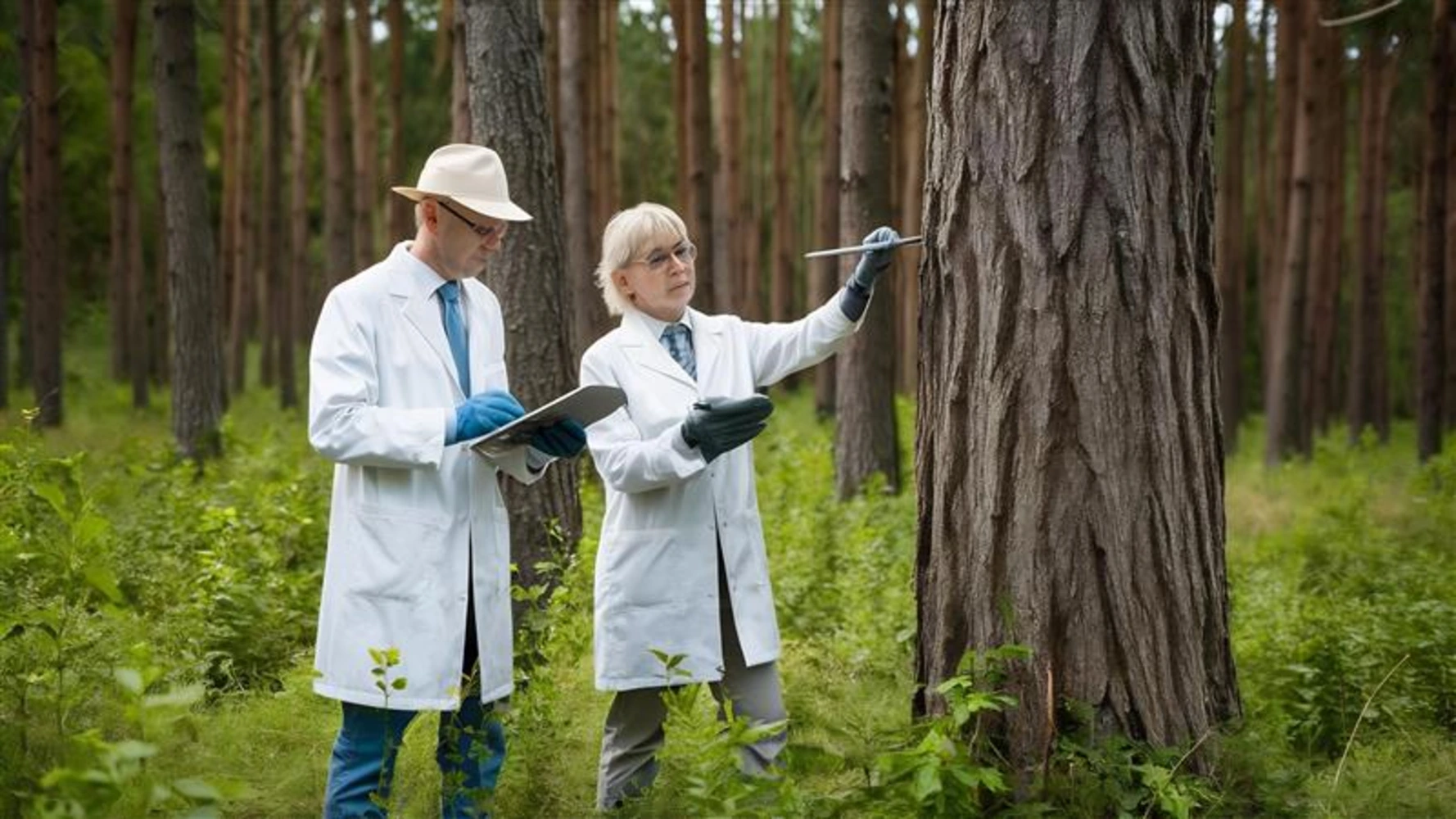
There should be a Tree Health Assessment to keep the natural beauty of Baulkham Hills safe and intact. The trees are a good asset in the local environment, yet they need to be checked frequently in order to identify any hidden problems that may be dangerous to humans and property.
A professional Tree Health Assessment is a thorough inspection of the entire tree structure, from roots to canopy, to detect early disease, decay, or structural instability. In Baulkham Hills, with the prevalence of mature trees and the native species such as eucalypts, a Tree Health Assessment is instrumental in long-term stability.
Arborists consider aspects like the quality of trunk, the strength of the branches, the health of the leaves, the soil and the quality of roots, to identify the root of evil that cannot be easily identified. Carrying out a Tree Health Assessment is also useful to monitor the observance of local laws and provide protection of the green landscape in the region.
Problems can be identified early, thereby ensuring that they are serviced in good time, minimising chances of incurring damages or removal that would cost a lot. Frequent monitoring gives comfort by assuring the safety, health, and good management of trees in residential and places of worship in Baulkham Hills.
Understanding Tree Risks in Baulkham Hills
In Baulkham Hills, local weather can challenge tree health. Heavy rains, droughts, and strong winds can weaken roots or break branches. A tree health assessment looks for these clues: dead wood, cavities, fungi, or unstable soil.
The Hills Shire Council even recommends focusing on trees near neighbours or in parks to keep people safe.
- Deadwood and Decay: Dying or fungus host branches (such as mushrooms) tend to break at random.
- Cracks or Lean: A splitting of the trunk or the inclination of the tree trunk is an indication that the tree is unstable.
- Root Damage: Ground-level construction or alteration can cause damage to roots, and this causes toppling of trees.
- Storm Damage: A tree that appears fine may have concealed dangers after a huge storm or fire.
Frequent examinations of Baulkham Hills, conducted by Tree Risk Management policies, ensure the safety of the people. They assist in warning about issues before it happens, and therefore you are able to act, but not to respond when a branch falls.
Key Steps for a Tree Health Assessment
A tree health assessment is a thorough check-up. An arborist knows “tree body language”: for instance, loose bark or tiny leaves can signal trouble.
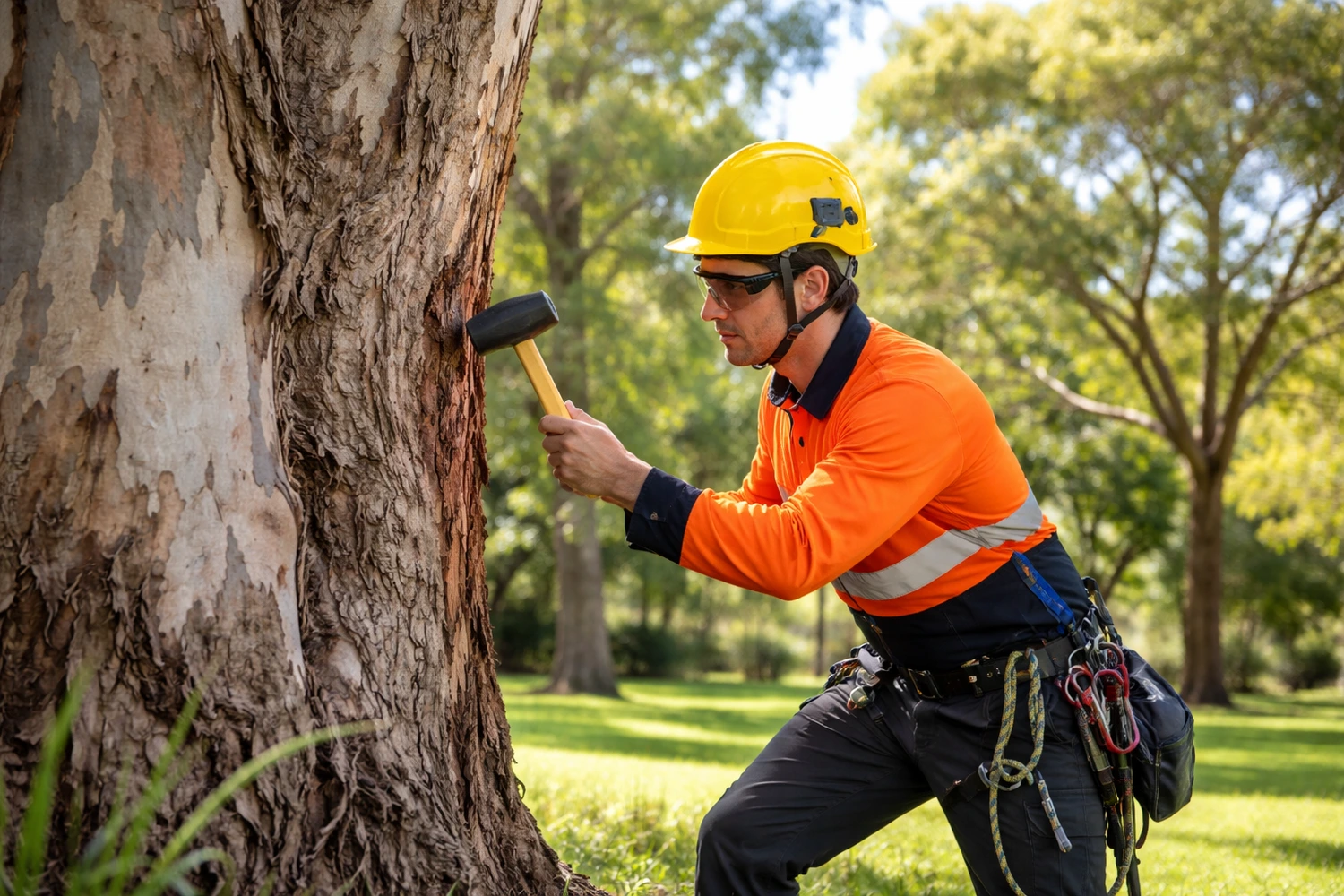 Key steps in a tree health inspection include:
- Visual Inspection: The arborist walks around the tree, noting any obvious damage or defects – broken limbs, holes from animals, or leaning trunks.
- Canopy and Branch Check: Using binoculars or climbing gear, they inspect upper branches for splits, dead wood or uneven growth. (Even small cracks can hint at a bigger problem.)
- Trunk and Root Probe: The trunk is checked for decay, rot, and cavities. Advanced tools like an increment borer (it removes a thin wood sample), can test internal health. They also look at roots for girdling (roots choking the base) or soil issues.
- Stress and Pest Signs: The inspector assesses leaf colour, bark health, and any signs of pests or diseases. Wilting foliage, boreholes, or unusual sap might mean the tree’s under attack.
- Environmental Factors: They consider the surroundings – is the tree near power lines, buildings, or footpaths? Are changes happening (new driveways, drainage alterations) that could stress the tree?
This report is crucial if you need council approval. The Hills Shire requires a qualified tree report when applying for the removal of protected trees.
Benefits of Tree Health Check-ups
Early Problem Detection: Identify the problem or disease in its initial stages before one of the branches extends to a point where it can be treated.
Cost Savings: Little repairs (such as trimming a fallen tree) are much cheaper than fixing storm damage to your home.
Longer Tree Life: By removing the problems ahead of time, trees will be healthy and have a long life (good for the environment and your pocket).
Legal Peace of Mind: An arborist report in writing can do you good. In case of future damage by a tree, you can prove that you took care of actions.
Concisely, a tree health assessment makes guesswork a reality. It is much truer to a hasty look. Even the overwatering or the damage of the nearby structures, which cannot be noticed by the roadside, can be monitored. It is this industriousness that keeps people safe.
Tree Health Assessment: Risks & Safety Actions
| Tree Issue | Warning Signs | Potential Risk | Recommended Action |
| Deadwood & Decay | Dry branches, fungi growth, hollow areas | Sudden branch fall | Prune deadwood, inspect for internal decay |
| Cracks or Lean | Visible trunk splits, tree leaning to one side | Tree collapse | Immediate arborist inspection |
| Root Damage | Uplifted soil, exposed or cut roots | Tree instability or falling | Protect the root zone, avoid construction impact |
| Pest & Disease | Holes in bark, discoloured leaves, sap leakage | Weakening of the tree structure | Apply treatment, monitor tree health |
| Storm Damage | Broken limbs, hanging branches after storms | Falling debris hazard | Remove damaged branches promptly |
| Soil/Environmental Stress | Poor drainage, compacted soil, and nearby construction | Gradual decline and structural weakness | Improve soil condition, aeration, and proper care |
Council Rules and Certified Arborists
Baulkham Hills falls under The Hills Shire Council (Norwest), which takes tree safety seriously. By law (the State Environmental Planning Policy on Vegetation), many trees are protected – you can’t just chop one down without permission. If you do need removal or heavy pruning, you typically need an arborist’s report first. This ensures decisions are based on expert advice, not guesswork.
The ACT Tree Register is important in the conservation of important trees in the Australian Capital Territory, where trees of high ecological, cultural or aesthetic interest are conserved to be used by future generations. If you are the owner of property or intend to undertake any landscaping, it is important to know about the ACT Tree Register,
where the listed trees are legally protected and must be approved before any pruning or removal of the tree or any significant undertaking. Homeowners and developers will take part in preserving the natural heritage of Canberra by acknowledging and respecting the ACT Tree Register, as well as preventing possible fines or compliance problems.
Practical Tips for Hills District Homeowners
Keeping trees safe isn’t only an arborist’s job. You can do a lot to help:
- Schedule Regular Checks: If you’re not sure how to inspect a tree, make it a habit to call an arborist every few years. It’s cheaper than surprise emergencies.
- Watch for Warning Signs: Fallen fruit or seeds, peeling bark, lots of dead leaves in summer – these may signal ill health.
- Trim Smartly: Light pruning removes weak branches before they break. (In NSW, the council says you need consent to prune more than 10% of a tree – hire professionals.)
- Mind the Roots: Avoid cutting tree roots or piling soil around the base. Tree roots hate being smothered.
- Clean Up After Storms: Remove or report any storm-damaged trees quickly. Even trees that look “fine” after a gale may have hidden splits.
- Community Action: Talk with neighbours about shared tree issues. A falling branch on a car is nobody’s idea of fun.
Conclusion
A solid Tree Health Assessment in Baulkham Hills does more than just tally leaf growth – it keeps people and property safe. By spotting hazards early, treating diseases, and recommending the right work, certified arborists protect our community. It’s part of being a responsible homeowner, balancing our love of trees with practical safety.
Ready to make your trees safe and sound? You do not want to wait till the problems are hidden, and then they turn out to be expensive. With qualified arborists will be able to check your trees attentively and detect possible hazards, and give qualified advice to maintain your property safe and prosperous.
Book your Tree Health Assessment in Baulkham Hills now and enjoy peace of mind knowing your trees are healthy, well-maintained, and hazard-free. Reaching out to schedule your local arborist tree health check!
FAQs:
So what is involved in a tree health assessment?
It consists of a complete physical and visual analysis of a tree. The arborist examines the branches, trunk, leaves and roots searching to find disease, pests or structural problems. The report on the health of trees and any work recommended is the result.
When do I want my trees to be checked?
With large or old trees, it is prudent to do so every 1-3 years or after major storms. Young trees do not usually require that frequent checks be made. You want to spot issues at the beginning. When you notice red flags, call an arborist immediately.
Who can conduct a health assessment on a tree?
An arborist or consultant who has completed at least a Diploma in Arboriculture and has a minimum of relevant experience. Level 5 is widely sought after in the council in NSW, according to official reports. Credential and membership: Never forget to check.
Is permission required by the council for the work that an assessment recommends?
It will also be subject to the recommendations of the arborist. Pruning of dead or dangerous branches may not require permission. But the taking down of a healthy tree or severe pruning generally does.