Ever heard a loud crash in the night and worried a branch had smashed through your roof? In leafy Baulkham Hills, that scenario isn’t far-fetched. Tree Risk Assessment steps in as a kind of safety check for your trees. It’s a professional inspection to catch hazards early, so you fix them before disaster strikes.
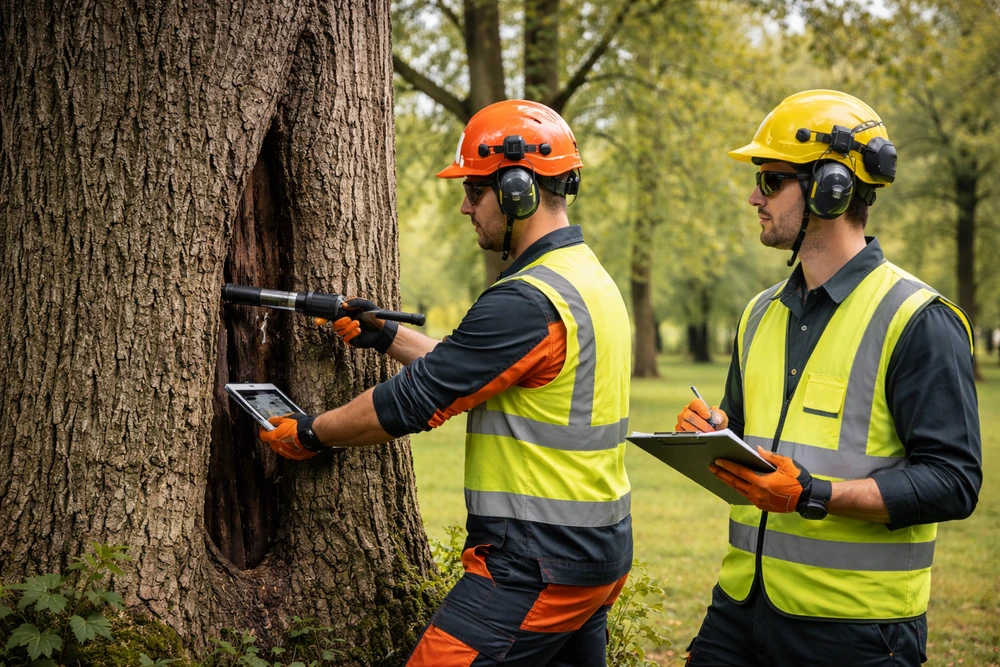
You might think trees are invincible, but even they need check-ups. A thorough Tree Risk Assessment evaluates the health and structure of each tree. The arborist will walk around, probing for cracks, decay or leaning trunks, and test limb strength.
In Baulkham Hills, especially, this preventive approach is crucial, given our climate and soils. Baulkham Hills has a unique environment. Summers here are hot and dry, stressing trees, while winters are cooler than the coast but still bring occasional frost. Mature natives and exotics line our streets.
This guide aims to provide you with the information needed to understand how tree risk assessments function and their importance in Balukham Hills. It will discuss common risks in the area, inspection methods, and safety practices for your trees and family.
What Is Tree Risk Assessment?
A tree risk assessment is exactly what it sounds like: a systematic check of a tree’s health to identify dangers. An arborist will examine each part of the tree: roots, trunk, branches and leaves. Each tree is scored for risk based on the likelihood of failure and what is under it.
The arborist will give recommendations after the survey is carried out. The recommendations may range from trimming away dead or overgrown branches to cutting down the tree itself due to its high-risk factor.
Key steps in a tree risk assessment often include:
- Visual inspection: Survey the whole tree looking for any lean, root problems, or bark rot.
- Crown examination: Examine the crown for dead or hanging branches and weak branch unions.
- Root examination: Examine the ground beneath the tree for any problems, such as upheaval or exposed roots.
- Hazard analysis: Decide how likely a problem is. (Is the crack just cosmetic, or is the branch about to snap?)
- Action plan: Low-risk trees might just need monitoring or minor pruning. High-risk trees will be marked for prompt pruning or removal.
For instance, a formal Tree Risk Management Plan “provides clarity on which trees pose hazards and why. By identifying risks early, you can take proactive steps to manage them before they escalate into costly or dangerous problems”.
Baulkham Hills Environment Overview
Climate, Soil and Tree Risk Factors
| Category | Details |
| Soil Conditions | Baulkham Hills has clay-based soil that retains water well, promoting fast and lush plant growth. However, it can become waterlogged after rain, leading to root suffocation and increased risk of root rot. |
| Climate Characteristics | The area experiences very hot summers and mild winters. Heatwaves can stress trees, causing cracks or limb drop, while occasional winter frost can damage sensitive plants and young trees. |
| Common Tree Types | Popular species include Brush Box, Sydney Blue Gum, Paperbarks, and native Frangipanis, which provide dense canopy cover and aesthetic value. |
| Tree Weight & Structure Risks | Mature trees, especially gums, develop heavy branches that can weigh hundreds of kilograms when wet, increasing the risk of falling limbs. |
| Storm Impact | Summer storms are common and can cause large branches or entire trees to fall, often damaging nearby fences, roofs, or structures due to close housing layouts. |
| Property Risk Factors | Homes in the area are often close together, so fallen trees or branches are more likely to impact structures and neighbouring properties. |
| Preventive Measures | After storms, inspect large trees (especially eucalyptus) for loosened bark, cracks, or split trunks to reduce risk and ensure safety. |
Common Tree Risk Assessment in Balukham Hills
So what specific problems should you watch for? Here are the big ones:
Storm damage: Powerful winds and rain can break or uproot trees. Even a brief gust of 80 km/h might snap an old branch if it’s already weakened.
Rot and decay: Fungi and beetles love to attack living trees. You might not see them, but they can hollow out branches or trunks. An arborist can spot signs (like conks or sawdust) that mean wood is rotting inside.
Weak branch unions: Branches that fork at narrow angles (known as V-crotches) can split under weight. This is common in fast-growing street trees.
Soil issues: Our clay can shrink-swell. After a dry spell, then heavy rain, roots may shift or heave, destabilising the tree.
Drought stress: Hot, dry periods can cause trees to drop their lower branches as a survival tactic. These dead limbs then become hazards.
For a quick self-check, you can look for: holes or cavities in trunks; cracks or splits in large branches; fungus growth; and a pronounced lean. If you spot any of these, it’s a red flag.
Also watch for mushrooms or sawdust at the base (that often signals inner rot). It’s wise to get any suspicious tree evaluated professionally, because even trees that look healthy on the outside may hide faults inside.
How to Conduct a Tree Risk Assessment
You can hire a certified arborist or do a basic check yourself. Either way, here are practical steps:
Walk-Around Survey: Circle each tree. Look for limbs hung up on fences or powerlines, cracks at branch joints, and sagging bark sections. Notice if soil is mounded up at one side of the base (a tip of root movement).
Ground-Level Checks: Tap the trunk with a rubber mallet – a hollow sound can mean internal decay. Inspect roots: any exposed roots or uplifted soil could mean instability.
Crown Inspection: From a safe distance, scan the canopy. Dead branches (with no leaves or very few leaves) often have grey bark. Large wounds or unfilled cuts are also age-prone weak spots.
Risk Rating: Think about what’s underneath the tree. If a big branch were to fall, would it hit your house, car, or a play area? Arborists quantify this into a risk rating, but even you can note “high risk” (over house) or “low risk” (over open field).
Mitigation Plan: Low-risk issues might just need trimming. If you see an obvious hazard (like a cracked branch), trim or brace it. If the tree is too dangerous to fix, plan removal.
If you hire a pro, they often use tools like resistographs and checklists. They’ll produce a Tree Risk Management Plan. Environmental policies of the NSW Government should also be in agreement with a professional Tree Risk Assessment. NSW Environment and Heritage tree risk management policy.
The policy emphasises that frequent inspections, including pruning, relocation, or elimination, are critical in minimising the risks associated with trees without necessarily compromising the biodiversity and the natural values.
Benefits of Proactive Tree Care
Regular tree risk assessments may seem like extra work, but they pay off. The most obvious benefit is avoiding damage. You and your family can sleep soundly during storms, knowing there’s no hidden bomb in the backyard.
There are also legal and financial perks. A documented tree report by a qualified arborist shows insurers and neighbours that you acted responsibly. Plus, preserving healthy trees maintains your home’s value and street appeal. Well-kept shade trees can raise property value, while dead trees do the opposite.
And don’t forget safety – people live under these trees. A Tree Risk Management Plan literally “safeguards surrounding buildings, infrastructure, and landscapes from avoidable damage caused by falling branches or tree failure”.
Finally, regular tree risk assessments often reveal that most trees need only modest upkeep. This balanced approach saves the trees you love while still keeping everyone safe.
In practice, the combination of following such guidelines and having an arborist do a Tree Risk Assessment ensures your home is truly protected.
Conclusion
In a nutshell, don’t let your beautiful Balukham Hills trees turn into money pits or danger zones. Treat tree safety like regular home maintenance. Schedule a tree risk assessment once a year, and definitely after major storms.
Protect your peace of mind: contact a certified arborist for a professional tree inspection today. They’ll give your leafy friends a clean bill of health and your home a stronger shield against nature’s surprises.
Ready to secure your home? Reach out to a local arborist or the City Council’s tree department for advice. With a bit of foresight and care, you’ll keep both your trees and your property safe.
Don’t wait for an emergency, organise your tree risk assessment now and keep your Balukham Hills home safe and sound!
FAQs:
What is a tree risk assessment?
Tree risk assessment refers to the evaluation of trees for safety hazards done by qualified experts. It involves inspecting the tree structure for weaknesses and risks that can lead to failure. The objective of tree risk assessment is to identify the risk and take corrective measures to prevent the hazard.
Why do I need a tree risk assessment?
A tree risk assessment ensures that there will be no harm in the event of a falling tree or a part of its branches. Tree risk assessment eliminates hazards that may cause property destruction, such as the collapse of a tree and cause injuries from dead trees. Additionally, the assessment makes an insurance claim easier.
Can I conduct my own tree risk assessment?
An individual can conduct a preliminary tree risk assessment by inspecting the tree. Nevertheless, for an in-depth evaluation, it would be wise to seek the help of qualified arborists.
How often should I get my trees checked?
A general rule is at least every 3–5 years for mature trees, or sooner after big storms or heatwaves. Young healthy trees might need less frequent checks. If a tree looks cracked, bulging, or suddenly starts dropping limbs, call an arborist right away.