Trees may seem quiet, but they’re doing a lot of work. In Baulkham Hills, our leafy streets and parks offer shade, cleaner air, and a touch of nature in the suburbs. Keeping those trees healthy isn’t just a nice-to-have; it’s smart home maintenance. That’s where an Arborist Tree Assessment comes in. This proactive care helps trees live longer, stay safe, and keep looking great.
In Baulkham Hills, there are also rules about trees. You need council approval before removing or heavily pruning a big tree. More importantly, regular tree assessments ensure your green assets stay strong through hot Aussie summers, storms, and even councils’ tree preservation laws.
They cool the air, buffer stormwater, and even lift property values. In fact, city studies note that mature trees “provide essential urban infrastructure” keeping temperatures down, preventing erosion, and reducing nutrient runoff.
With an arborist’s help, you can keep your backyard forest thriving. We will discuss Arborist Tree Assessment: what they are, why they are important, and how they maintain healthy trees at Baulkham Hills in the sections below.
What Is an Arborist Tree Assessment?
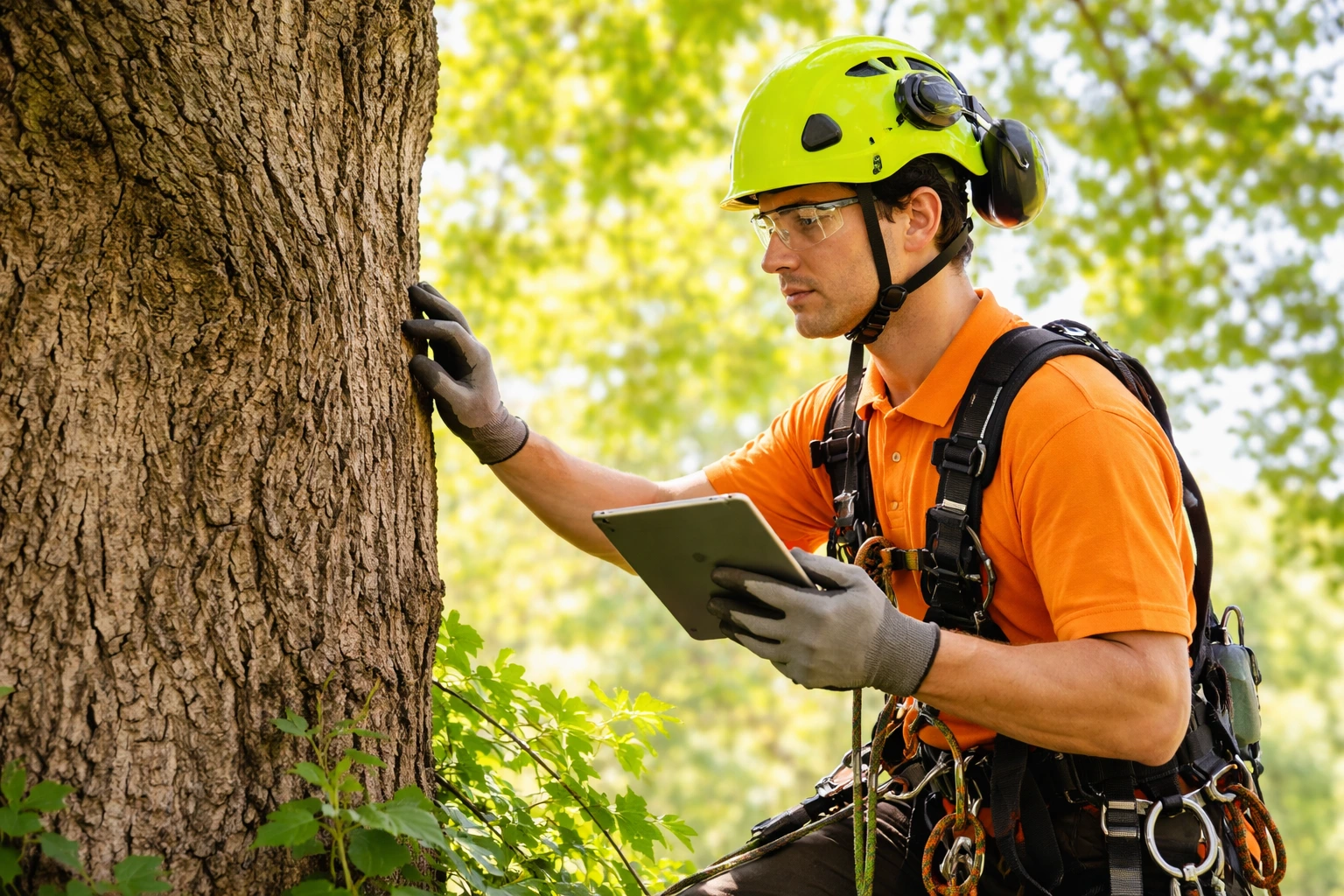
An Arborist Tree Assessment is a tree inspection performed by an arborist when you call them to assess that tree. This is a professional check-up in which the arborist (a tree expert) assesses your tree’s health and structure. They will study the trunk, branches, roots, leaves, soil, and the surroundings.
In doing so, they are able to identify issues that you may be unaware of, such as internal rot, root damage, or disease. An excellent arborist will then suggest remedies, which may include cutting a branch that may break off in the next storm, curing a fungus, or adding nutrients to the soil.
Arborists are basically guardians of our urban forests. With diploma-level training (often called AQF Level 5), they know tree biology and how to fix issues. For instance, a certified arborist will spot if a tree’s canopy is thinning or if its roots are hitting a building slab.
They then write a report or plan to help the tree recover or prevent problems. In Baulkham Hills, such assessments support council rules too: a tree report can be required for major pruning or removal, as per local regulations.
Why Tree Assessments Matter for Healthy Growth
Even the apparently healthy tree should be inspected by an Arborist Tree Assessment, as numerous serious problems may be hidden under the bark or in the ground. The trees may be decayed internally, infested by pests, or have their roots compacted without any apparent external signs.
An Arborist Tree Assessment is a professional assessment of trees conducted by trained arborists with specialised equipment to identify such concealed issues before they become hazardous or expensive to treat. By detecting issues in time, the tree can be saved, and significant risks can be avoided.
That branch might not be maintained promptly, and it may break down in a storm, leading to injury or damage to property. Similarly, when roots are not doing well in compacted soil, an arborist might suggest soil aeration or mulching to enhance root health.
An Arborist Tree Assessment is a comprehensive examination of your trees, substituting guesswork with the advice of an expert, so that you know your trees are healthy, safe, and sound.
Key Signs Your Trees Need a Professional Check
Trees in serious trouble usually show symptoms. Keep an eye out for these red flags:
- Cracks /splits: A massive crack along the trunk or a split branch may indicate internal deterioration or fragility.
- Dead branches: A dead branch or two is nothing to be alarmed about, but when big chunks of the canopy are dying, that will be an issue.
- Fungal fruiting bodies: Mushrooms or bracket fungi on the trunk or at the base can typically be an indication that the wood is decaying internally.
- Leaning: Lean of a tree: a tree with a significant lean (not caused by a storm) may contain unstable roots.
- Loose-leaf cover: Leaves thinning or canopy density may reflect root problems, disease, or compaction of the soil.
- Sucker growth: Sometimes, excess shoots at the base of the tree is an indication of a stressed or dying main trunk.
These are some of the things to look out and in case you find any of them, it is prudent to have an Arborist Tree Assessment. The arborist will decide whether or not the problem can be resolved (and how) or whether it is best removed. It is possible to prevent damage to your home or injuries in the yard by acting before the falling of branches or roots.
The Growth Enhanced by Arborist Tree Assessments.
Periodical tree evaluation literally makes trees grow healthier. Here’s how:
Early detection of disease: Early detection of diseases (such as root rot or borers) can be made by the arborist, and treatments or removal of the affected areas can be applied. This prevents the spreading and allows the tree to heal.
Care of soil and roots: Healthy roots require good soil and space. Arborists are able to check the quality of soil (nutrients, pH, drainage) and prescribe aeration or mulching. Well-established roots translate to better health.
Strategic pruning: Dead or overgrown branches can be cut back to enhance airflow and sunlight within the canopy. This assists the tree to photosynthesise more effectively and avoid mildew or pests.
Pest management: Aphids to wood-boring insects, arborists have a clue on how to identify and treat infestation without damaging the tree.
Growth planning: Arborists take into account the way in which a tree will develop in its surroundings. They are able to recommend providing sufficient space to a tree; therefore, roots and branches will not be hindered in the future.
Each part of the assessment focuses on nurturing the tree’s needs. For example, by ensuring the root zone isn’t being compacted by construction or parking.
The tree can access water and nutrients easily. That means taller, stronger, leafier growth. Essentially, an arborist’s advice keeps the tree in its sweet spot of health.
Arborist vs DIY: Who’s Better for Tree Care?
It might be tempting to DIY some tree care, but the difference in outcomes can be like night and day. Consider this quick comparison:
| Approach | DIY Tree Care | Professional Arborist Assessment |
| Accuracy | Often misses subtle issues | Expert eyes catch hidden problems |
| Safety | Risky (climbing, heavy limbs) | Professionals use safety gear and techniques |
| Long-term results | Variable — problems can return | Reliable, planned solutions for health |
| Pest/Disease diagnosis | Hard to spot early signs | Expert identification and treatment plans |
| Compliance with laws | Often overlooked; might violate regs | Adheres to local rules (permits, etc.) |
| Equipment & training | Limited tools and knowledge | Specialised tools & training |
DIY pruning might feel productive, but cutting the wrong branch or at the wrong time can harm a tree. A professional arborist not only prunes safely, but also knows which branches to prune and how to prune them for the tree’s benefit.
Urban Tree Management in Baulkham Hills
Baulkham Hills (The Hills Shire) is a green area of Sydney, yet even in this area, trees are confronted with the urban challenges that require the services of Arborist Tree Assessment to be performed regularly.
These, combined with long dry summers and the frequent severe storms, may weaken the trees with time. A professional arborist tree assessment can be used to detect these invisible risks promptly so that trees will be safe, healthy, and structurally sound in urban areas.
Council policies reflect the importance of balancing development with tree preservation. According to The Hills Shire Council’s tree management guidelines, removing or heavily pruning a healthy tree often requires council approval because every mature tree contributes to the area’s environmental health and visual appeal.
An Arborist Tree Assessment is, in most instances, demanded as supporting evidence in most cases when trying to remove a hazardous tree. Councils may request an arborist report, photos, or hazard evidence to confirm that removal is justified and necessary.
What Happens During an Arborist Assessment?
Curious about the process? It’s typically straightforward:
Visual inspection: The arborist walks on top of every tree, inspecting the trunk, the branches, and the leaves. They seek holes, rot, and infestations of pests, and unnatural growth formations.
Structural assessment: The arborist determines the soundness and strength of wood by using tools or even by tapping the wood. They can push or tug at branches or examine the way roots reach the surface.
Check of soil and root: The soil conditions are observed. Is it compacted? Waterlogged? They may examine root girdling (circling roots around the trunk) or damage due to recent landscape.
Site considerations: The immediate surroundings are considered, e.g., distance to buildings, overhead wires, or pavements. This assists in the identification of risks in the future.
Report and recommendations: Lastly, the arborist summarises findings in a report (which might be needed by the council). This report describes tree health and gives recommendations: short-term corrections (such as pruning or treatment), and long-term treatment (mulching, watering schedules, or planting new trees).
Conclusion
Baulkham Hills is not just a suburb; it is a suburb that is constructed around its trees. Every sound gum and oak gives colour, worth and beauty. Your device is an Arborist Tree Assessment to maintain this living heritage. It is an investment in safety, comfort and property value.
Don’t leave the health of trees to chance. You may have a single treasured jacaranda or a dozen backyard natives, but be sure to have a professional evaluation of your greens and keep them growing strong. Even a small amount of professional attention will result in decades of healthy, sound trees in the future.
Ready to give your trees the expert care they deserve? Reaching out and booking a Baulkham Hills arborist for a comprehensive tree assessment today, and enjoy a safer, greener garden tomorrow.
Frequently Asked Questions
What exactly happens in an Arborist Tree Assessment?
An arborist will visually inspect the tree’s trunk, branches, roots, and canopy. They’ll look for signs of disease, structural issues, pests, and soil problems. The process usually includes a report with recommendations for care or pruning.
What is the frequency of my tree evaluation in Baulkham Hills?
For mature or large trees, it’s recommended to schedule an Arborist Tree Assessment Baulkham Hills every 1–2 years, or immediately after major storms. Annual examinations could be advantageous to young trees until they are well established.
Is it possible to rescue a dying tree?
In many cases, yes. A qualified Arborist Tree Assessment Baulkham Hills is able to diagnose the cause of decline; it might be disease, pests, poor soil or simply lack of water. When the issue is identified in advance, the arborists can frequently suggest the treatments or changes that can be used to recover the health of the tree and avoid the removal.
Am I required to have a permit to trim or cut trees in Baulkham Hills?
An Arborist Tree Assessment Baulkham Hills may be able to supply the documents required to assist in your application, enabling it to be determined whether the tree is a risk or if there are alternative solutions.