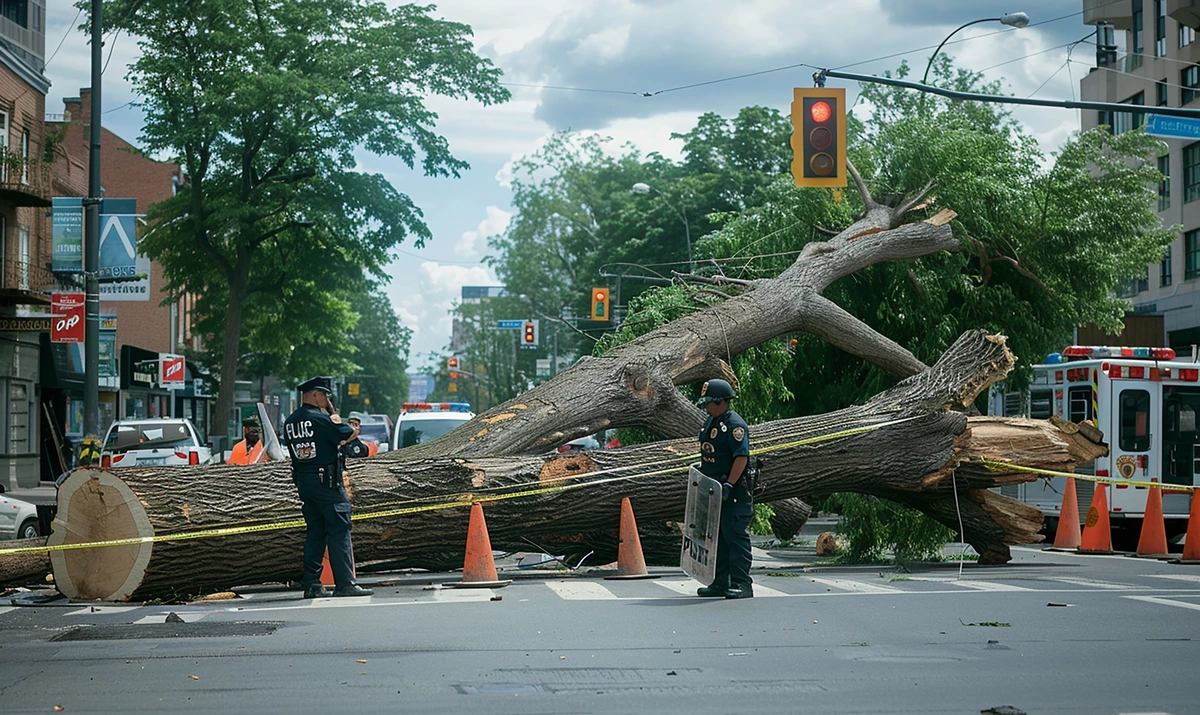
You know the sound. A sharp crack, a heartbeat of silence, then a thud on the roof at 2am while a storm rolls across the Hills District. Nobody plans for it, but plenty of us have lived it, and the next morning’s coffee tastes a lot like regret.
I’ve spent enough time around trees in Castle Hill, Kellyville and Dural to know that most dangerous branches give you plenty of warning before they fall. The trouble is that we only look up once something has already landed on the ute. This guide walks you through seven clear signs a branch is a safety risk, and shows you when emergency tree branch removal stops being a “maybe later” job.
Think of it as a pre-flight check for your backyard. By the end, you’ll know what to look for, what to do straight away, and when to ring All Hills Arbor for emergency tree branch removal before a small problem turns into an insurance claim.
What Is Emergency Tree Branch Removal, and When Do You Need It?
Emergency tree branch removal is the urgent, professional cutting and clearing of a branch that has already failed, is about to fail, or is threatening people, property or power lines. It’s different from routine pruning, which is planned, calm and mostly about health and shape. Emergency work is about risk, and the clock is ticking. Think of the gap between a scheduled dental check-up and a cracked tooth on a Saturday night.
You generally need emergency tree branch removal when a branch is broken but still hanging, when it’s resting on a roof, fence or car, or when it’s blocking a driveway or street. Anything touching or near powerlines is a hard stop. Don’t touch it, don’t climb it, and call your electricity network and emergency services first. You’ll also hear related terms like emergency tree removal, fallen tree removal and storm damage tree removal. The scale of the job changes, but the urgency doesn’t.
Why the Hills District Has Its Own Branch Problems
The Hills is beautiful because of its trees. Spotted gums, blue gums and turpentines line the streets of Cherrybrook and Glenhaven, and bushland backs onto half of Kellyville and Rouse Hill. But eucalypts have a quirky habit: they can drop limbs with little warning, sometimes on perfectly calm days. Add summer thunderstorms, sudden westerly gusts and clay soils that turn soggy after heavy rain, and you get a steady supply of storm-damaged branches.
That’s why local knowledge matters. An arborist who works around here every week knows which species hold up and which ones love shedding. When you’re weighing up emergency tree branch removal against waiting it out, local conditions often tip the scales towards acting early.
The 7 Signs a Tree Branch Is a Safety Risk
Here are the seven red flags. None of them need a botany degree, just a decent pair of eyes and five minutes with a cuppa. If you spot more than one on the same branch, treat it as a prompt to book emergency tree branch removal rather than filing it under “next month”.
Sign 1: Cracks, Splits and Fresh Tear Wounds
Cracks are a tree’s way of saying it’s under strain. Look for splits running along a branch or at the point where it joins the trunk. A fresh tear with pale, exposed wood and ragged bark usually means the branch has already partly failed. It might hang on for a week, or it might let go in the next gust. A cracked limb above a patio, pool or kids’ play area is a textbook case for emergency tree branch removal. It’s like a cracked windscreen: you can keep driving, but you’re gambling on every bump.
Sign 2: Dead Branches and Deadwood
Dead branches are brittle, and brittle things break. Warning signs include no leaves in the growing season while the rest of the tree is green, bark peeling away in sheets, and a dry, grey look. Snap a small twig, and if it cracks cleanly with no green inside, it’s dead. Dead branch removal is one of the most common jobs we see, and it’s best done before a storm rather than after one. Leaving deadwood hanging over your house is like parking a sandbag above your bed and hoping it behaves. If the branch is big or high, skip the pole saw and book emergency tree branch removal.
Sign 3: Hanging or Broken Branches
A snapped branch lodged in the canopy is called a “hanger”, and the old-school nickname is “widowmaker”. Grim, but accurate. Hangers can drop with no warning because wind, birds or even vibration can shake them loose. Never stand underneath one to snap a photo for the insurer. Keep people and pets well clear, rope off the area, and call for emergency tree branch removal straight away. This is where a proper emergency tree service earns its keep, because a trained crew can secure and lower the limb with rigging instead of letting gravity make the call.
Sign 4: Branches Over Your Roof, Powerlines or Neighbour’s Yard
Location changes everything. A rotten branch in the middle of an empty paddock is a nuisance, but the same branch over your bedroom is a hazard. Branches on or near powerlines are the most serious of all. Assume the lines are live, keep well back (many safety agencies advise at least eight metres from a downed line), and call your network provider and emergency services. Hazardous tree removal near powerlines must be handled by suitably qualified and authorised crews. Overhanging branches can also become a headache with the neighbours if they cause damage. When the risk is high and the target is close, emergency tree branch removal is the sensible fix.
Sign 5: Fungus, Mushrooms, Hollows and Decay
Mushrooms or bracket fungus growing on a branch or trunk often point to rot on the inside. Other clues include a hollow sound when you tap the wood, sawdust-like material near the base, oozing sap, and small holes where insects have moved in. The sneaky part is that a branch can look green and healthy while it’s rotting from within. That’s why a glance from the lawn isn’t always enough, and why an arborist’s assessment is worth every dollar. If the decay is advanced, hazardous tree removal or emergency tree branch removal may be far safer than hoping for the best.
Sign 6: Weak Joins and Tight V-Shaped Forks
Branches that grow in a tight “V” often have bark trapped between them, which creates a weak join. Picture two people squeezed onto one bar stool: it’s fine until someone wobbles. Heavy twin stems on mature trees are a common failure point in storms. If you spot a crack starting between them, treat it as urgent. Early tree limb removal, or cabling by an arborist, can sometimes save the tree. Wait too long and you may need emergency tree branch removal plus a much bigger clean-up.
Sign 7: Sagging Limbs, Lifted Soil and Sudden Changes
Trees change slowly, so sudden change is a signal worth taking seriously. Maybe a limb has drooped lower than last month, the tree has a new lean, or the soil around the base is heaving or cracking. Heavy, over-extended branches get worse after rain because wet foliage adds serious weight. If something just looks different, trust your gut. A quick call costs far less than a repair bill. Changes like these, especially after a storm, usually mean it’s time for emergency tree branch removal or a full emergency tree removal assessment.
Quick Urgency Guide: How Serious Is Each Sign?
Not every warning sign means you should drop everything and ring now. This table shows how urgent each one is and what to do first, so you can decide whether you need emergency tree branch removal today or a booked inspection this week.
| Warning Sign | Urgency | Your First Step |
| Branch touching powerlines | Emergency | Stay clear, call your network provider and emergency services |
| Hanging or broken branch | Immediate | Cordon off the area, call an emergency tree service |
| Fresh crack or tear near the house | High | Keep people away, request same-day assessment |
| Weak V-fork starting to split | High | Book an arborist inspection soon |
| Large dead branch over a structure | Medium to high | Book dead branch removal before the next storm |
| Fungus, hollows or decay | Medium | Arborist inspection |
| Sudden sag, lean or lifted soil | High | Keep clear, call for an urgent assessment |
What to Do Before Emergency Tree Branch Removal Arrives
When a storm drops a limb across your yard, adrenaline kicks in and bad ideas follow. Resist the urge to grab the chainsaw and play hero. For urgent storm help where life or property is at risk, the NSW State Emergency Service is the right agency to contact, and you can reach them on 132 500. While you wait for emergency tree branch removal, here’s a simple order of play:
- Move everyone, including pets, away from the tree and out from under any hanging limbs.
- Treat every wire near the tree as live and keep well clear.
- Take photos from a safe distance for your insurer.
- Call for emergency tree branch removal and describe exactly what you can see.
- Don’t climb, and don’t cut anything that’s under tension.
That last point is the sneaky one. A branch pinned under another can spring violently when cut, and a leaning limb can twist the moment you release the pressure. These are the situations where a rigged, controlled cut is the difference between a tidy job and a trip to Westmead Hospital.
Storm Damage Tree Removal vs Fallen Tree Removal vs Pruning
People mix these terms up all the time, and that’s fine, but knowing the difference helps when you describe your problem on the phone. Storm damage tree removal is the broad term for cleaning up after a weather event. Fallen tree removal covers trees or limbs already on the ground. Tree limb removal means cutting off a specific limb, and dangerous branch removal targets a branch that’s about to cause trouble. Emergency tree branch removal is the fastest version, where making things safe comes first and tidying up comes second.
Once things are safe, tree debris cleanup is the bit everyone forgets. A good crew will chip or haul away the mess so you’re not left staring at a Jenga pile of timber on your lawn. It’s worth asking about clean-up when you book, because it separates a proper job from a half-finished one.
Is DIY Emergency Tree Branch Removal Ever a Good Idea?
Short answer: rarely. If a small, light branch is sitting on the ground and doesn’t touch anything, sure, grab the secateurs. But anything above head height, under tension or near wires needs a professional. Ladder falls and chainsaw injuries are common causes of weekend yard-work trips to the emergency department, and a tired DIYer on a wet ladder is a bad combination.
Professional emergency tree branch removal brings training, rigging gear and insurance, which your weekend toolkit simply doesn’t. DIY saves a few hundred bucks right up until it costs thousands. If you wouldn’t do your own electrical work, don’t do your own work on a swinging three-tonne limb.
Permits and Council Rules in the Hills District
The Hills Shire Council has tree preservation rules, and some tree work in NSW needs approval. However, there are usually exemptions when a tree or branch poses an imminent risk to life or property. The details depend on your property and the type of tree, so check with council or ask your arborist, who will generally know the process. Don’t assume emergency tree branch removal skips paperwork entirely. Photos of the hazard and a written assessment can protect you if questions come up later.
How to Choose a Reliable Emergency Tree Service
When a branch is hanging over your roof, it’s tempting to ring the first number you find. Slow down for sixty seconds. Look for qualified arborists, ideally with formal arboriculture training, proper public liability insurance, clear quoting and a plan for clean-up. Ask whether they’ll tell you honestly if the job really is urgent. A trustworthy emergency tree service will say so when emergency tree branch removal is needed, and just as readily say when a scheduled job next week will do.
At All Hills Arbor, we believe in straight answers. We’d rather tell you a branch is fine than sell you a job you don’t need. That honesty builds trust, and trust is what you want when someone is climbing a tree above your house.
What Affects the Cost of Emergency Tree Branch Removal?
I can’t give you a one-size-fits-all price, because every job is different. The main factors are the size and height of the branch, how easy it is to reach, whether powerlines or buildings are involved, the time of day, and how much tree debris cleanup is needed. A small branch on an open lawn is simple. A heavy limb over a pool, a roof or a boundary fence needs more crew, more gear and more care.
The best way to avoid nasty surprises is to ask for a clear quote that explains what’s included. Compare it with the cost of fixing a damaged roof, and professional help starts looking like very good value.
Preventing the Next Emergency
Prevention is dull, but it works. Get your trees checked once a year, keep them pruned away from roofs and wires, and schedule dead branch removal before storm season, which in Sydney generally runs from spring through summer. Think of it as servicing your car: skip it and you’ll eventually pay for a breakdown on the worst possible day. Regular care dramatically cuts the odds of a 2am call-out.
Conclusion
Dangerous branches rarely fail without hints. Cracks, dead wood, hanging limbs, branches over roofs or powerlines, fungus and decay, weak joins, and sudden sagging are all signs that a branch is a real safety risk. Act quickly, keep people clear, never touch anything near powerlines, and leave the risky cutting to trained pros. In the Hills District, where eucalypts and storms go hand in hand, knowing when to call for emergency tree branch removal can save you money, stress and possibly a lot worse.
If you’ve spotted any of these signs in your yard, don’t wait for the next storm to make the decision for you. Contact All Hills Arbor today for fast, safe and honest emergency tree branch removal across the Hills District. Tell us what you can see, send a few photos if it’s safe to take them, and we’ll help you work out the next step.
Frequently Asked Questions
1. What counts as emergency tree branch removal?
It covers any situation where a branch is broken, hanging, resting on a structure, blocking access or threatening powerlines, people or property. If waiting a few days could cause injury or damage, it’s an emergency. Storm-damaged branches that are still partly attached are a classic example, because they can drop without warning.
2. How do I know if a branch is dangerous?
Look for cracks, dead wood, fungus, weak V-shaped joins, sudden sagging or a branch hanging over your roof or powerlines. Any one of these is a warning sign. Two or more together means you should get an arborist to take a look as soon as possible.
3. Can I cut a dangerous branch myself?
You can handle small, low, light branches safely if nothing is touching them. Anything high, heavy, tangled in other limbs or near wires should be left to professionals. The risks of falls, kickback and unexpected spring-back are real, and the cost of a mistake is far higher than the cost of a call-out.
4. How fast can an emergency tree service respond?
Response times depend on demand, location and the severity of the situation. After a big storm, crews get flooded with calls, so urgent jobs involving powerlines or structural damage get priority. The sooner you ring and explain clearly what you can see, the sooner a crew can plan the right equipment and get to you.
5. Does home insurance cover tree branch damage?
Many home and contents policies cover storm damage, and some include a contribution towards removing fallen trees or branches, but policies vary widely. Check your product disclosure statement or ring your insurer. Take photos before anything is moved, and keep your invoice from the arborist.